

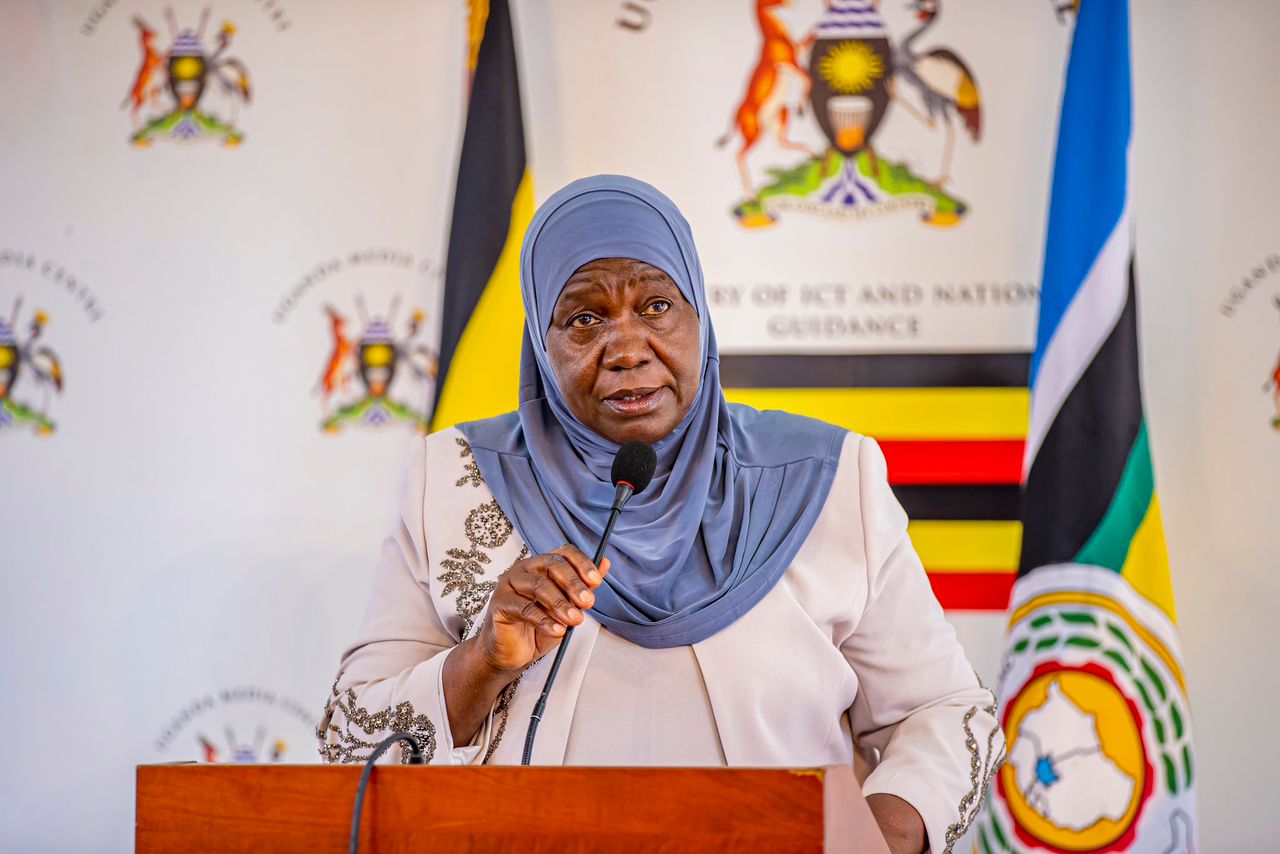
The Government has directed that enforcement of the trade order in Kampala continues unabated, dismissing claims that the exercise had been suspended and warning against any return to illegal street vending and related urban trading practices.
The clarification was issued by the Minister for Kampala Capital City and Metropolitan Affairs, Minsa Kabanda, who said Cabinet had resolved that the enforcement remains a priority and must proceed as planned.
“Cabinet pronounced that Trade Order is nonnegotiable,” Kabanda said following a special Cabinet discussion held on April 27.
The minister’s statement comes in response to remarks made in Parliament on April 24 by State Minister for Finance, Planning and Economic Development (General Duties) David Bahati, which suggested that the enforcement had been halted.
The comments triggered confusion among traders and members of the public already adjusting to the ongoing operations in the capital.
Kabanda warned that such uncertainty risked reversing what she described as significant progress achieved since the commencement of the enforcement drive in February, led by the Kampala Capital City Authority (KCCA).
“Kampala is the capital city of Uganda and the face of our nation. The standards we set here must reflect order, discipline, and structured economic activity,” she said.
She directed KCCA to maintain its operations and ensure that all gains made under the initiative are protected and sustained. She also called for professionalism among enforcement teams and adherence to legal procedures during operations.
Under the directive, traders have been instructed to operate strictly within designated markets, arcades, and gazetted trading areas. Authorities have maintained that illegal vending, encroachment on roads, and disorderly trading practices will not be tolerated.
According to Kabanda, the enforcement exercise has already delivered what she described as “visible and measurable gains,” including reduced congestion in the Central Business District, improved sanitation, enhanced public safety, and better accessibility of roads and walkways.
She cited the clearance of major streets such as Luwum Street, Namirembe Road, and Nakivubo Road, adding that similar improvements have been observed in divisions including Kawempe, Makindye, Lubaga, and Nakawa.
The minister further noted increased uptake of market spaces, reporting that 1,663 out of 2,520 available workspaces have already been allocated. She also pointed to improved compliance with business licensing requirements.
Between February 19 and April 27, KCCA issued 22,909 new business licences valued at sh5.07 billion, compared to 15,628 licences worth sh3.9 billion recorded in the previous period.
“The progress made so far must not be reversed, otherwise we shall have lost the gains so far achieved with Trade Order,” Kabanda said.
She also highlighted improvements in waste management and drainage systems, noting that reduced street vending has improved stormwater flow, particularly along the Nakivubo Channel.
Looking ahead, Kabanda said the authority is preparing to extend the enforcement programme to the public transport sector, including the formalisation of boda-boda stages and the restructuring of taxi operations.
She warned that any attempts to disrupt or undermine the enforcement process would be dealt with firmly, as government moves to entrench order in the capital city.
